
Let me ask you something private.
Something you have never said out loud to anyone — not your sister, not your best friend, definitely not your doctor.
Since you had your baby... things down there have not been the same.
You notice it. Of course you notice it.
But you carry this thing alone, in silence, hoping it will somehow fix itself. Hoping time will do what it has not done in months — or years.
Maybe I just need to do more Kegels.
Maybe it will get better on its own.
Maybe this is just... what happens after a baby.
And meanwhile, intimacy has quietly become a source of anxiety instead of connection. You find yourself dreading it, avoiding it, or going through the motions — all while pretending everything is fine.
Your partner has not said anything directly. Maybe he does not have to. You can feel the shift.
The small moments of distance. The less frequent initiation. The look that you have learned to read, even if you both pretend you have not.
And you think: Is this my fault? Did my body betray me? Is this just the price of becoming a mother?
You have tried searching for answers online — and what you found was either terrifying (surgery, laser procedures, thousands of dollars) or useless (generic Kegel instructions you already know). You tried the Kegel apps. You started and stopped a dozen times. Nothing stuck. Nothing worked well enough.
You have maybe even tried some of the herbal products sold on Instagram. The yoni pearls. The steaming kits. The teas that promise to "tighten everything back." You spent money. You followed the instructions. And then... nothing meaningful.
You are not broken. You are not being punished. You simply have never been shown the right method.
The method that your grandmother's generation used instinctively. The one that combines herbs, exercise, and nutrition in a way that actually works together — because the body heals through systems, not single shortcuts.
That method exists. And today, right now, on this blog — I am going to show you exactly what it is.
Drop everything you are doing right now and read every single word I am about to say.
This method is not new.
It is not something invented in a laboratory or discovered by a Western medical researcher. It has been around for generations — quietly passed down from mothers to daughters across West Africa, whispered at naming ceremonies and first-time-mother gatherings, shared in the kind of honest conversations that women used to have before we all became too busy and too embarrassed.
Our grandmothers had four, five, six children — and stayed firm, stayed confident, stayed intimate. Nobody talked about it publicly. But the knowledge was there, passed down in kitchens and through village gatherings and in the hands of midwives who understood the female body in ways that no textbook has ever fully captured.
Then that knowledge got scattered. Modernisation happened. Hospital births replaced traditional birth attendants. Pharmaceutical solutions replaced herbal ones. And an entire generation of women lost access to something their grandmothers took for granted.
Until a 75-year-old retired midwife named Mama Ngozi decided it was time to pass it on again.
Hi. My name is Adaeze Nwosu.
First thing you should know about me: I am not a doctor. I am not a gynaecologist. I am not a women's health coach or a certified anything. I am just a regular woman — a mother, a wife, a daughter — who spent two years suffering with something I was too ashamed to tell anyone about.
And then I met Mama Ngozi, and everything changed.

Let me take you back to 2023.
I had just turned 29. My daughter Amara was eight months old. On paper, life was beautiful. I had a healthy baby, a supportive husband — Emeka — a modest flat in East London, and my part-time job was manageable around Amara's schedule.
But behind closed doors, I was falling apart.
Amara had been a big baby — 4.1 kilograms — and my delivery had been long and difficult. The recovery was slow. The midwives told me everything was "normal." The doctor discharged me with a leaflet about pelvic floor exercises. I did them for a few weeks, stopped, started again, stopped again.
By month four, I knew something was not right. Not right in the way you know deep in your body, the way women know things they cannot always explain.
Intimacy had changed. Significantly. The sensation was different. The confidence was gone. I would lie awake at night and think: is this permanent? Is this just me now? Is this who I am for the rest of my life?
Emeka never said a word. He was kind. Patient. But I am his wife — I know when something has shifted between us. I could feel it in the way the evenings changed. The way he would read his phone a little longer before sleeping. Small things. But they accumulated inside me like stones.
I stared at her. What was she even talking about?
But Auntie Blessing had been married for 35 years and had three children and carried herself with the kind of quiet confidence that I desperately wanted. So I listened.
She told me I needed to find a proper solution. Not a shortcut. A system.
I went home and started searching. This is what I tried over the next six months:
1. Kegel apps (Perifit and others). I downloaded three different ones. I was diligent for about two weeks each time. The exercises were fine. But they worked in isolation — no dietary support, no herbal component. My body was not getting the internal nourishment it needed alongside the strengthening. I gave up each time because progress was invisible and painfully slow.
2. Pharmacy "tightening" creams and gels. I spent more money than I care to admit on products from pharmacies in Stratford and online. Some caused irritation. None caused improvement. Most were water-based lubricants dressed up in clever packaging. A complete waste.
3. Yoni pearls from an Instagram vendor. I saw the testimonials. I believed them. Three weeks of following the instructions and I noticed nothing except mild discomfort on day two. The vendor became unresponsive when I messaged asking questions. I learned later that medical professionals warn against these products specifically. I felt foolish for trying.
4. Vaginal steaming. I tried a herbal steam kit I found on Etsy. It smelled lovely and felt relaxing. But it had zero lasting effect on firmness or tone. It was essentially a fancy spa moment — pleasant but not therapeutic.
5. A private women's wellness consultation. £120 for one session. The therapist was kind and gave me a sheet of pelvic floor exercises — the exact same ones the NHS had already given me for free. No herbal guidance. No dietary protocol. No ancestral knowledge whatsoever. I left feeling dismissed.
6. A £600 course on "postpartum restoration." I paid for it during a desperate night when I could not sleep. The content was generic. American-focused. No mention of African herbs, no understanding of the African body, no culturally relevant dietary advice. I completed it and felt no different.
By this point I had spent close to £900 and was no further forward. I was exhausted, increasingly hopeless, and beginning to believe that perhaps this was simply something I had to accept.
Then came the Easter gathering.
My mother's side of the family held their annual reunion in Birmingham — aunties, cousins, children running everywhere, jollof rice steaming from 6pm, the familiar chaos of a Nigerian household at full volume. I had almost not come. The thought of sitting and pretending everything was fine felt unbearable.
But I came. And that is where I met Mama Ngozi.
She is 75. My mother's oldest auntie — a retired midwife who practiced for nearly four decades, first in Enugu, then in Lagos, then briefly in London in the late 1980s. She is small. Quiet. The kind of woman who observes more than she speaks, and when she does speak, people go still.
I ended up sitting next to her on the back porch while the children played in the garden. I do not even remember how the conversation started. We were talking about my daughter, about the birth, about the recovery — and then something loosened in me, and before I knew it, I was telling her things I had not told anyone.
Not everything. But enough.
She listened without reacting. Just nodded slowly. When I finished she was quiet for a moment.
She talked for almost two hours. I did not move once.
She told me about oak gall extract — known in parts of West Africa and used across many traditional medicinal practices for its natural astringent properties that help tone and tighten tissue. She told me about witch hazel, and how it has been used for generations in both African and Native American healing traditions. About aloe vera — not just applied topically but used in specific preparations that support internal healing of collagen and connective tissue. About the exact progression of pelvic floor exercises that builds real neuromuscular strength over 60 days, not the random Kegel repetitions that most apps suggest. And about the specific foods and micronutrients — vitamin C, vitamin E, collagen precursors found in everyday African ingredients — that the body desperately needs to rebuild tissue from the inside.
Stupidly simple, I thought. Why has no one told me this before?
"I won't believe this until I try it," I told her honestly.
She smiled. "That is the right response, my daughter. Try it. Then come back and tell me."
I started the following Monday.
Days one through five: nothing I could clearly identify. I stayed consistent anyway, because I had made a promise to myself that I would give this 60 days with no early judgements.
Day nine: something small. A sensation I had almost forgotten. A faint awareness of muscle engagement that felt different from before. I did not want to get excited. I wrote it in my journal and moved on.
Week three: I knew.
I do not know how to explain it other than to say my body felt more like mine again. The tone was returning. The confidence that had been quietly draining out of me since Amara's birth was starting — slowly, tentatively — to come back.
By week six, Emeka noticed.
We were in bed, and he pulled back to look at me with this expression I had not seen in almost two years. That expression.
I started to cry. Happy crying. The kind that comes when you have been holding something so tightly for so long that the release feels enormous.
I told him about Mama Ngozi. He laughed. Then he held me for a long time without saying anything.
By the end of the 60 days, I was a different woman. Not just physically. Mentally. In confidence. In how I carried myself. In how I felt about my marriage and my body and my future.
I went back to that Easter group and found three other women who had been at that gathering and had similar conversations with Mama Ngozi. All three had tried her method after that day. I called them in the weeks that followed.
Chidinma, 34, from Manchester — three children, youngest just over a year old. She started the protocol six weeks after our Easter gathering. By week four she had stopped dreading intimacy and started initiating it again for the first time since her last delivery. "I cried the first time I felt like myself again," she told me over the phone. "Proper sobbing. I had given up."
Bukola, 31, from Leicester — one child, but a traumatic birth that left her feeling disconnected from her own body for almost eighteen months. She was the most sceptical of all of us. She sent me a voice note at week five that I have saved to this day: "Adaeze, I don't know whether to laugh or scream. This thing works. It actually works."
Yewande, 38, from Dublin — two children, had previously paid for a clinical consultation in Ireland that told her the only lasting solution was a surgical procedure. She started the 60-day protocol and by day 45 had cancelled the consultation. "I am not paying for surgery I no longer need," she told me simply.
After those conversations, I started getting messages. From cousins who had heard. From women in my church. From strangers who had been passed my number by someone else.
Every message asked the same thing: Can you send me what Mama Ngozi told you?
I spent three months going back to Mama Ngozi multiple times. Recording her instructions. Cross-referencing them with published research on pelvic floor rehabilitation, traditional plant medicine, and nutritional science. Testing the exact preparations and timings. Writing everything down in plain language that any woman could follow at home, privately, without needing specialist equipment, a clinic, or anyone's permission.
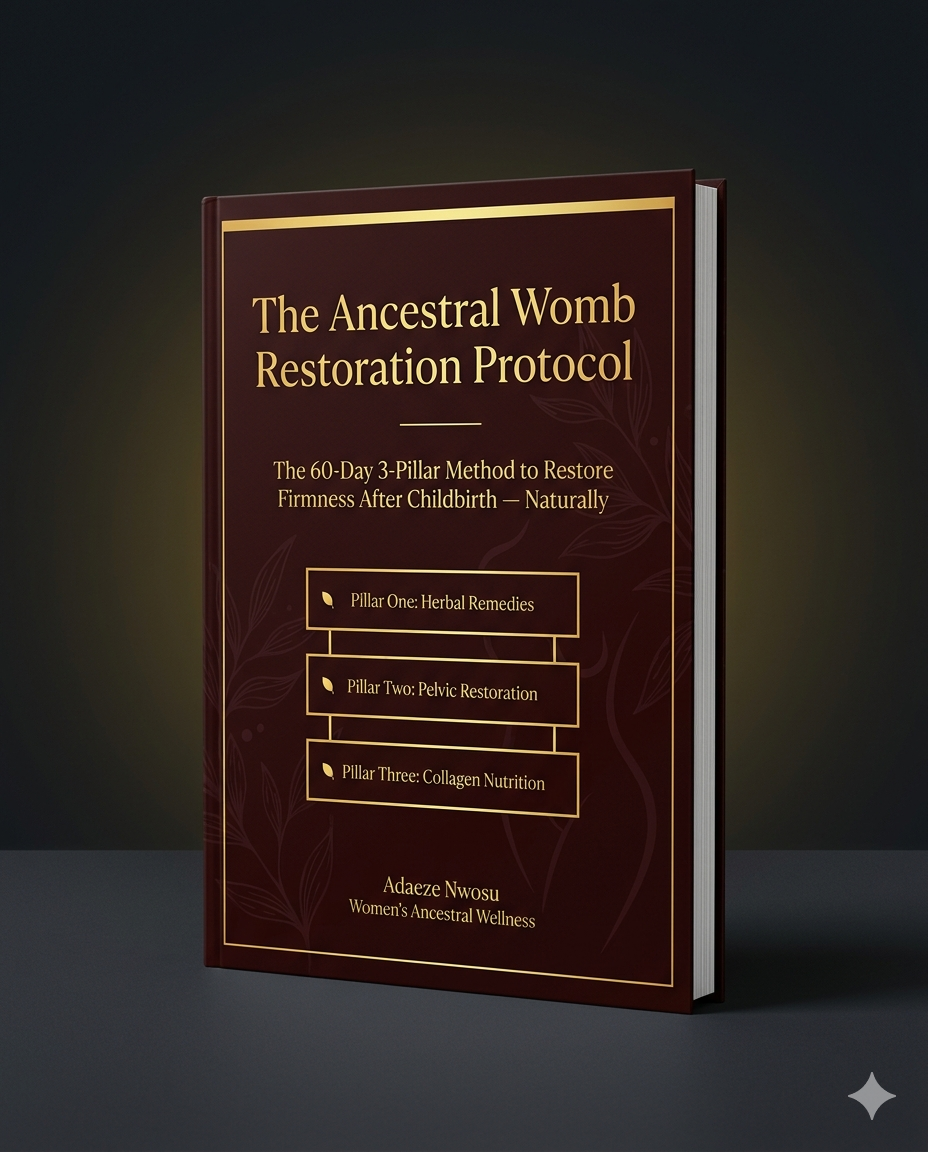
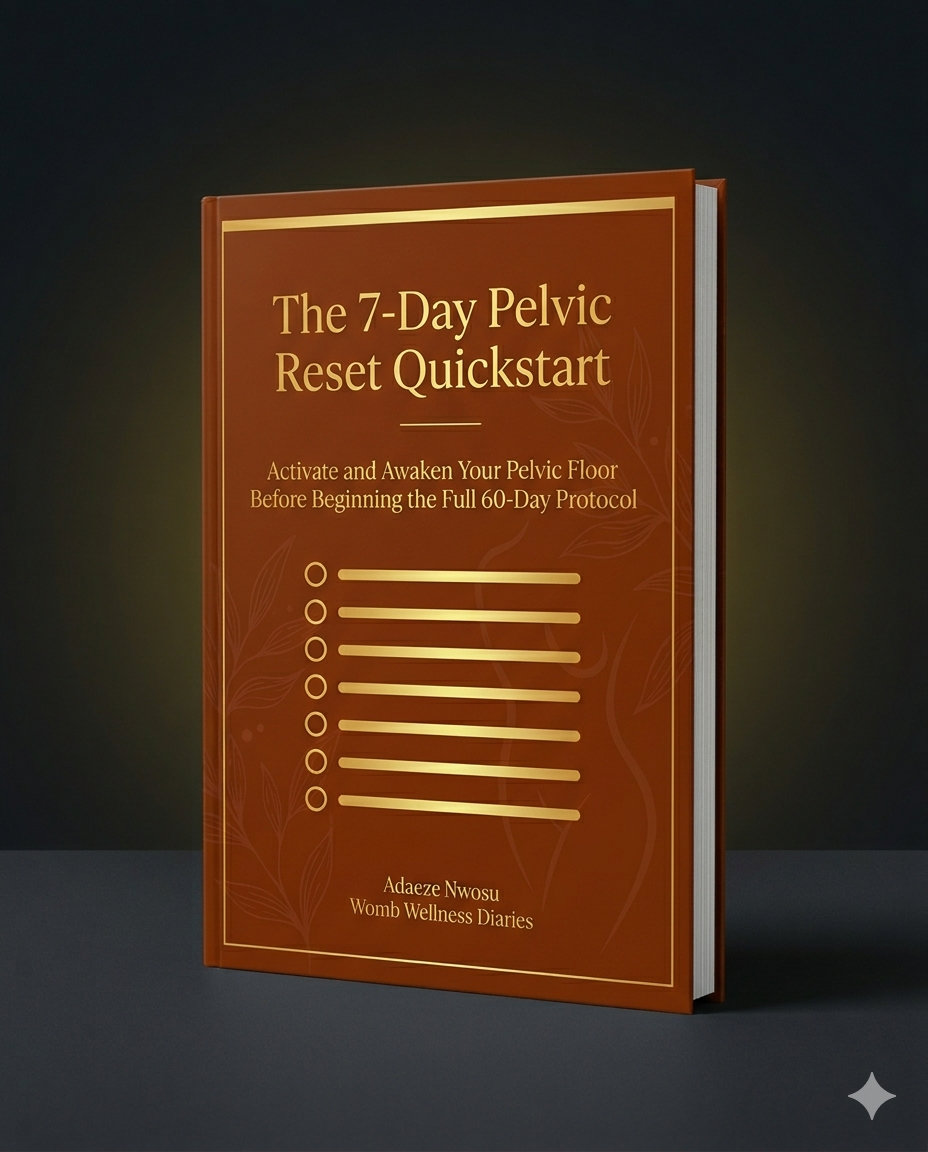
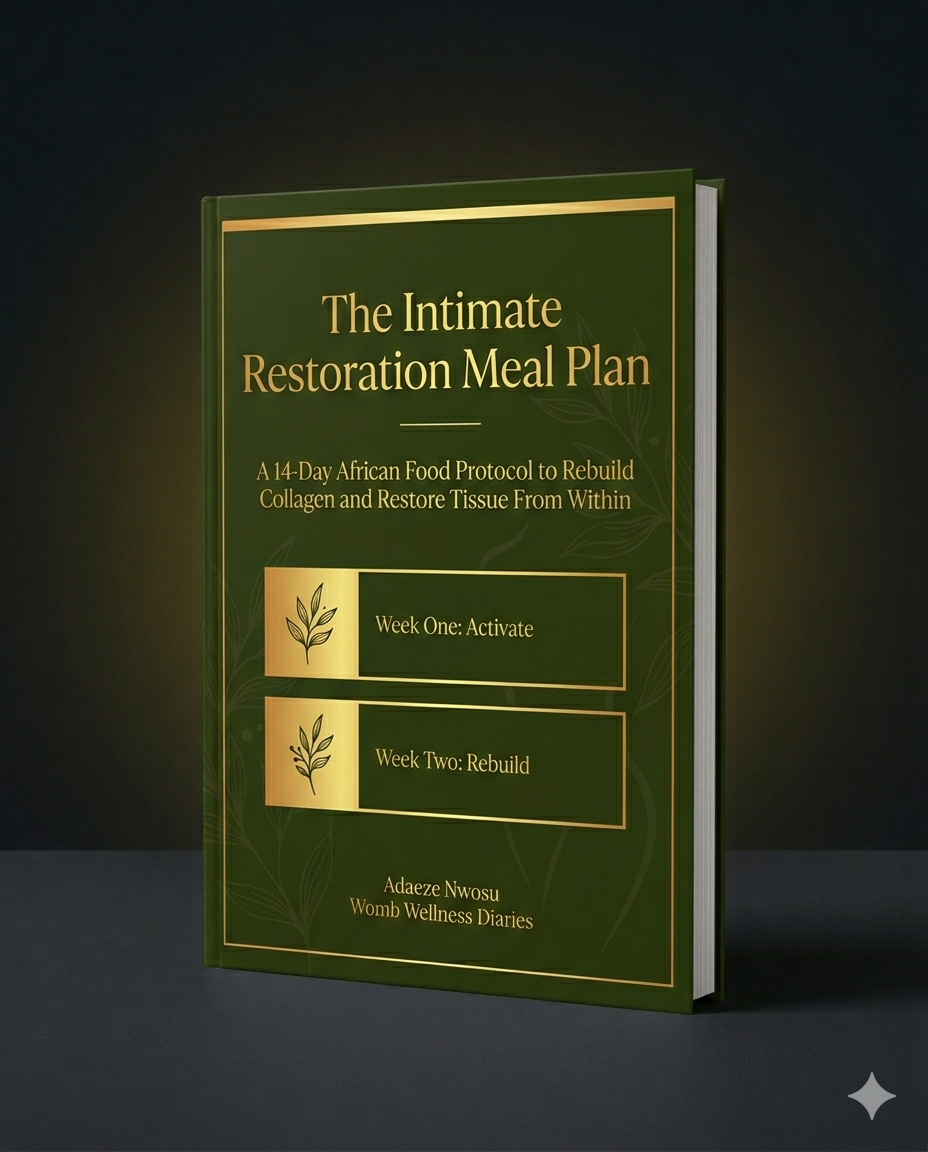
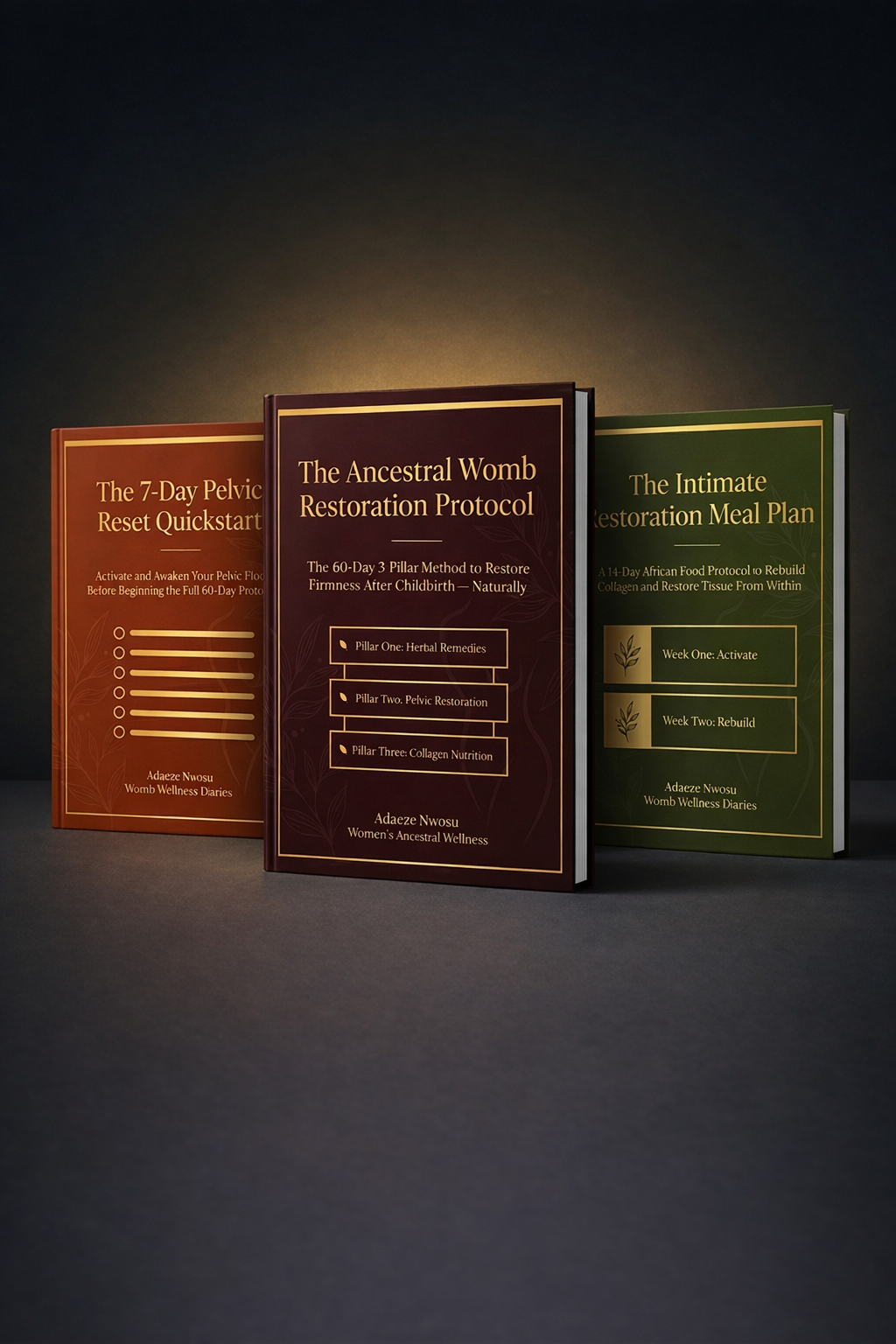
And then I put it all together in one simple, structured guide that any woman can download, read privately, and follow step by step from the first day.
📝 Share Your Experience